• Shopping Cart Shopping Cart
    0Shopping Cart
FETCH Magazine
  • Link to Facebook
  • Link to X
  • Link to LinkedIn
  • Home
  • Features For Fido
  • FETCH Columns
    • Health & Hounds
    • The Scratching Post
    • Off the Leash
    • Just One Tail
    • Tips 4 Kids
  • K9 Marketplace
    • Advertise With FETCH
  • FETCH Me If You Can
    • Adoptables
    • To The Rescue
  • Contact FETCH
    • Editor’s Paw
    • About FETCH
    • FETCH Issues
  • Click to open the search input field Click to open the search input field Search
  • Menu Menu
The Vet Is In

Cognitive Dysfunction Syndrome
BY KERRI WIEDMEYER, DVM, WVRC

What it is:
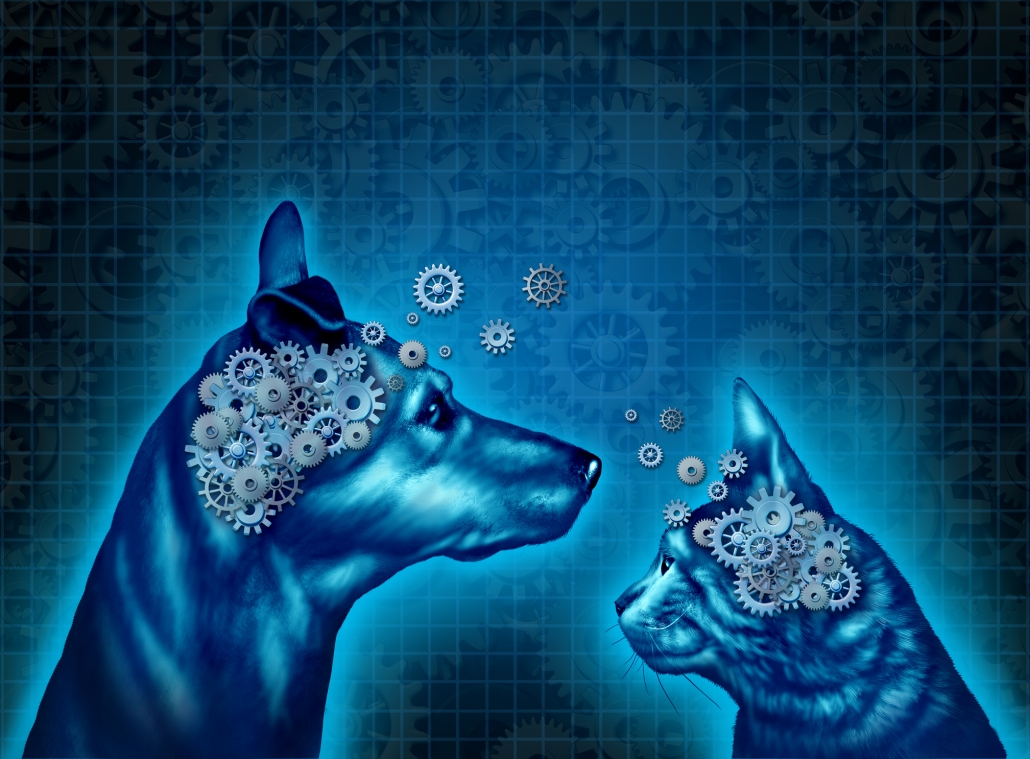
Cognitive Dysfunction Syndrome (CDS) is degeneration of brain activity that occurs with age. Commonly, these changes occur slowly with time, typically in dogs and cats over the age of 11 years old, with prevalence increasing the older the pet becomes. CDS is commonly compared to dementia in humans as many clinical signs can be similar and also worsen with age.

Causes:
Brain atrophy, or degeneration, occurs with age. This means the actual size of the brain decreases as well as the number of neurons. These changes are more notable in the cerebellar and cerebral areas of the brain. As atrophy occurs, cerebrospinal fluid fills in the empty areas.

Levels of neurotransmitters such as dopamine have been found to decrease with age. This results in decreased neurologic signaling and activity.

Beta amyloid plaques, which are proteins that damage neurons, increase with age, causing further cognitive dysfunction.

Vascular changes are common with age, and micro-bleeds and infarcts can occur that stop the normal blood flow to the brain and thus decrease oxygen and glucose to the brain.

Signs:
1. Confusion. Examples include staring off, getting stuck in a certain location in the house such as a corner or closet.
2. Loss of memory, changes in ability to learn. This includes accidents in the house or problems with training or known commands.
3. Activity changes like excessive licking, pacing and repetitive behavior.
4. Changes in response to stimuli/interactions with people. For instance, excessive barking, lack of interest and separation anxiety.
5. Change to sleep cycle. This may include pacing at night, deep sleep during the day, anxiety and restlessness.

Diagnosis: Diagnosis of CDS is made based on clinical signs, the pet’s history and how they respond to treatment. Other disease processes that can cause similar signs should be ruled out or treated prior to diagnosis of CDS.

Treatments: Diets containing omega-3 fatty acids, antioxidants and mitochondrial cofactors have been shown to improve cognitive function related to age. These diets may take several weeks before improvement is noted.

Medications: Selegiline is an enzyme blocker that slows down the breakdown of catecholamines such as dopamine, norepinephrine and epinephrine. It can also increase the production of dopamine. Most of the time, improvement is noted in 2-4 weeks after the medication has been started.

S-adenosylmethionine (SAM-e) is a supplement more commonly used for liver support. It has been shown, however, to have benefits in treating cognitive dysfunction.

Anti-anxiety calming medications and medications that increase cerebral blood flow have also been shown to help with the clinical signs associated with cognitive dysfunction.

Environmental Therapy: Environmental enrichment is a very important part of improving and maintaining cognition. Teaching new tricks can benefit both the owner and the pet and establish routines. New toys and consistent exercise are recommended as well. If hearing loss is a part of the aging process, then working on hand signals can be very beneficial and make for an easier transition if deafness occurs.

Prognosis: At the end of the day, age should not be thought of as a disease. Many of these dogs can have a good quality of life with the proper care from their loving owners.


July 23, 2020/by Kerri Wiedmeyer
Tags: CDS, Dr. Kerri Wiedmeyer, Summer 2020, the vet is in
Share this entry
  • Share on Facebook
  • Share on X
  • Share on WhatsApp
  • Share on Pinterest
  • Share on LinkedIn
  • Share on Tumblr
  • Share on Reddit
  • Share by Mail
https://fetchmag.com/wp-content/uploads/2020/07/iStock-476752846.jpg 1486 2017 Kerri Wiedmeyer https://fetchmag.com/wp-content/uploads/2021/10/Fetchlogo2022rgb-3-300x175.jpg Kerri Wiedmeyer2020-07-23 22:50:202020-07-27 11:13:35Cognitive Dysfunction Syndrome
You might also like
Hard Truths: Vets & Suicide
Can My Pet Get Covid-19?
ARE FLEA CONTROL PRODUCTS DANGEROUS?
Why is My Dog Drinking so much Water?
Heartworm Disease: An International Problem
How Smart is Your Cat?
Kennel Cough (CIRD): What is it?
THE HYDRANT: Dog Days During Covid-19

Looking for Something?

Search Search

Archives

For Book, Product & Article Review:

Email us for further instructions.

FOR DIRECT QUESTIONS:

Nastassia Putz, Publisher
(262) 337-1967

nputzfetchmag@gmail.com

FOR ADS/DISTRIBUTION:

Current Circulation: 10,000 to 13,000 copies per quarter, distributed to 300+ locations throughout Southeastern Wisconsin (Milwaukee, Madison, Racine/Kenosha, Green Bay).

Questions? Email us at info@fetchmag.com.

© 2025 - FETCH Magazine • franklin web designer
  • Link to Facebook
  • Link to X
  • Link to LinkedIn
  • Privacy Policy
  • Terms of Service
Link to: Rhodesian Ridgeback: South African Prince of Hounds Link to: Rhodesian Ridgeback: South African Prince of Hounds Rhodesian Ridgeback: South African Prince of Hounds Link to: Can My Pet Get Covid-19? Link to: Can My Pet Get Covid-19? Can My Pet Get Covid-19?
Scroll to top Scroll to top Scroll to top

This site uses cookies. By continuing to browse the site, you are agreeing to the use of our cookies.

Accept and ClosePrivacy PolicyDeny

Cookie and Privacy Settings


How we use cookies

We may request cookies to be set on your device. We use cookies to let us know when you visit our websites, how you interact with us, to enrich your user experience, and to customize your relationship with our website.

Click on the different category headings to find out more. You can also change some of your preferences. Note that blocking some types of cookies may impact your experience on our websites and the services we are able to offer.

Essential Website Cookies

These cookies are strictly necessary to provide you with services available through our website and to use some of its features.

Because these cookies are strictly necessary to deliver the website, refusing them will have impact how our site functions. You always can block or delete cookies by changing your browser settings and force blocking all cookies on this website. But this will always prompt you to accept/refuse cookies when revisiting our site.

We fully respect if you want to refuse cookies but to avoid asking you again and again kindly allow us to store a cookie for that. You are free to opt out any time or opt in for other cookies to get a better experience. If you refuse cookies we will remove all set cookies in our domain.

We provide you with a list of stored cookies on your computer in our domain so you can check what we stored. Due to security reasons we are not able to show or modify cookies from other domains. You can check these in your browser security settings.

Google Analytics Cookies

These cookies collect information that is used either in aggregate form to help us understand how our website is being used or how effective our marketing campaigns are, or to help us customize our website and application for you in order to enhance your experience.

If you do not want that we track your visit to our site you can disable tracking in your browser here:

Other external services

We also use different external services like Google Webfonts, Google Maps, and external Video providers. Since these providers may collect personal data like your IP address we allow you to block them here. Please be aware that this might heavily reduce the functionality and appearance of our site. Changes will take effect once you reload the page.

Google Webfont Settings:

Google Map Settings:

Google reCaptcha Settings:

Vimeo and Youtube video embeds:

Other cookies

The following cookies are also needed - You can choose if you want to allow them:

Accept settingsHide notification only