• Shopping Cart Shopping Cart
    0Shopping Cart
FETCH Magazine
  • Link to Facebook
  • Link to X
  • Link to LinkedIn
  • Home
  • Features For Fido
  • FETCH Columns
    • Health & Hounds
    • The Scratching Post
    • Off the Leash
    • Just One Tail
    • Tips 4 Kids
  • K9 Marketplace
    • Advertise With FETCH
  • FETCH Me If You Can
    • Adoptables
    • To The Rescue
  • Contact FETCH
    • Editor’s Paw
    • About FETCH
    • FETCH Issues
  • Click to open the search input field Click to open the search input field Search
  • Menu Menu
Features For Fido

Brittany: Small Players with Big Hearts

BY CHERESE COBB, FREELANCER

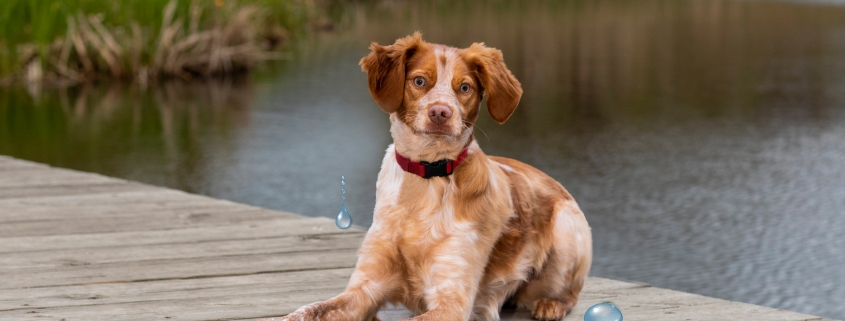
Sportsmen on both sides of the Atlantic cherish the conveniently sized and agile Brittany as an all-purpose hunting partner and a dog sport teammate. The only thing that makes a Brittany happier than the smelly, great, smelly, wonderful, smelly, outdoors (Did we say smelly?) is staying velcroed to their owners.

History
Brittany is the westernmost region of France, surrounded by the English Channel to the north and the Bay of Biscay to the south. It was here, possibly as early as 150 A.D., that peasants and poachers developed what’s today considered one of the world’s most versatile bird dogs that are capable of hunting duck, woodcock, pheasant and partridge.

While few breeding records have been kept, l’épagneul Breton, or Brittany Spaniel, is thought to be a cross between an orange-and-white English Setter, a Welsh Springer Spaniel and a Spanish Pointer. The breed was recognized in 1907 when an orange-and-white male named Boy was registered as the first Brittany Spaniel in France.

When Brittanys were brought to North America by Juan Pugibet in 1928, American hunters didn’t like them because of their short tails. “Although the Brittany doesn’t have the physique of a German shorthaired pointer or the beauty of a setter, it has enough heart to outhunt any other [gun] dog,” says David Schlake, an upland hunter from Austin, Texas. “If all the pointing breeds made up a team, the Brittany spaniel would be football player Rudy Ruettiger, who recorded an unlikely sack in the waning seconds of the 1975 Notre Dame-Georgia Tech football game.”

Louis A. Thebaud imported these “small players with big enough hearts” into the U.S. in 1931. Three years later, they were recognized by the American Kennel Club. But in 1982, their name was shortened to Brittany because their hunting styles resembled setters more than spaniels.

Never a Dull Moment
On May 12, 2018, Josh Graber and Heather Reichert bought their Brittany named Napa from Gilmore Brittanys in Boscobel, Wisconsin. “We had the option between two female dogs. We picked the one that we thought was going to be calmest,” Graber says. “Actually, she ended up being as energetic as ever.”

Napa successfully hunted pheasant at seven months. “If you don’t hunt them [or exercise them for at least an hour per day], they’ll find something to do, and that usually isn’t good,” says Susan Spaid, the President of the National Brittany Rescue and Adoption Network. “Brittanys do really well with invisible fences. While people do successfully keep them in apartments, they’re usually the kind of people that run five miles per day and take their dogs with them.”

Napa isn’t hardheaded, but self-confidence just kind of oozes out of her. “She lets people know what she wants and isn’t afraid to show it,” Graber says. “She particularly likes dogs that are bigger than her, and [she] can’t get enough of people. Anybody who comes in she tries to get them to do a belly rub.” If she didn’t have that adorable pink nose, she’d be [a] brown-noser for sure. All it takes is a passing look of disapproval from her owners to snap her out of mischief.

The Brittany is a little bit of a shedder but not a very heavy shedder. “I get my dogs’ coats cut pretty close during the summertime,” Spaid says. “But some people shave them.” Napa gets her teeth brushed every day. “I’m a dentist, so that’s something that we focus on. She loves the peanut butter and pork toothpaste,” Graber says, “She gets a bath once per week and her nails cut because they grow pretty fast.”

Health Issues
“The breed is the correct size to live a long life,” says Jesse Sondel, owner of the Sondel Family Veterinary Clinic in Madison, Wisconsin. “Most live 10 to 12 years, with one in five dogs dying of old age at 15 to 17 years.” While they’re fairly healthy, they’ve been known to suffer from hip dysplasia, a sometimes-crippling malformation of the hip joint that can require expensive surgical repair.

Other conditions that can affect the breed are epilepsy and retinal atrophy—which is an untreatable eye disease that causes blindness. Some Brittanys also are born with cleft palates or have hypothyroidism, a common hormonal disease that causes their metabolisms to be as slow as molasses in January. “All breeders should do OFA [Orthopedic Foundation for Animals] hip, elbow and thyroid testing prior to breeding,” Sondel says.

Should You Adopt a Brittany?
Athletic, bright and family-oriented, Brittanys are amazing dogs, but they’re not for everyone. “If a robber entered your house, a Brittany would hold the flashlight for him. They’re just not good watchdogs,” Spaid says. Some Brittanys, especially adolescents, also might suddenly urinate when they get over-excited or feel intimidated.

Whether their owners are taking a Saturday snooze or trekking to the mailbox in their slippers, the Brittany just wants to be near them. But make no mistake; this is not a couch-potato puppy. Brittanys need daily, heart-thumping exercise—whether hunting, doing canine sports or human-centered activities like playing fetch with the kids—to keep their high spirits from bounding off.

June 29, 2019/by Cherese Cobb
https://fetchmag.com/wp-content/uploads/2019/06/cover.jpg 3831 5746 Cherese Cobb https://fetchmag.com/wp-content/uploads/2021/10/Fetchlogo2022rgb-3-300x175.jpg Cherese Cobb2019-06-29 15:49:582023-12-29 12:46:10Brittany: Small Players with Big Hearts
The Vet Is In

Why is My Dog Drinking so much Water?

BY KERRI WIEDMEYER, DVM, WVRC

There are many factors that determine how much water a dog drinks in a given day, but if you notice that your dog is drinking bowl after bowl, there may be a cause that warrants investigation.

Thirst is regulated by several different components in the body including blood vessel volume, parts of the brain (pituitary gland, thirst center, hypothalamus) and the kidneys. For example, if a dog is dehydrated, hormones are released from the brain that communicate to the kidneys to keep water in the body and activate the thirst center. If a dog is urinating excessively, the body then responds by having the dog drink more to make up for that loss of water. Unfortunately, certain diseases can interfere with how thirst and urination are regulated, causing your dog to gulp down bowl after bowl of water. Below is a list of a few of these causes.

Kidney Disease: The function of the kidneys is to filter blood and balance electrolytes. They also regulate blood pressure and red blood cell production. Kidneys can become damaged for a multitude of reasons such as chronic disease, infection, toxins or cancer. When they become damaged, they cannot do their job properly and excessive urine is produced. Excessive urination then leads to excessive drinking.

Diabetes Mellitus: Diabetes occurs when there is not enough insulin produced to regulate glucose in the body. This results in excessive amounts of glucose in the bloodstream. When the glucose is excreted from the body, water follows it, producing excessive urine. As with kidney disease, the excessive urination causes excessive thirst/drinking.

Cushing’s Disease (Hyperadrenocorticism): Cushing’s is a disease in which the body overproduces cortisol. Cortisol, in turn, blocks other hormones from doing their job and results in excessive urination and, thus, excessive drinking.

Liver Disease: The liver has many different jobs including protein and hormone production, detoxifying the blood, and metabolism of fats, carbohydrates and drugs. As a result, if the liver is failing, there are several different pathways that can lead to a dog urinating excessively and drinking excessively.

Medications: Unfortunately, some of the medications prescribed for our pets can have side effects that make them drink and urinate more frequently. Examples include steroids, diuretics that are commonly used for heart failure treatment and some anti-seizure medications.

Psychogenic Polydypsia: Psychogenic polydypsia is drinking excessive water without any underlying cause or illness. Many think this is done from boredom or for attention, but it is overall a very rare cause for excessive thirst.

If this sounds like your beloved pup, then consider having him or her checked out by your veterinarian.

June 29, 2019/by Kerri Wiedmeyer
https://fetchmag.com/wp-content/uploads/2019/06/iStock-97686043.jpg 4200 2800 Kerri Wiedmeyer https://fetchmag.com/wp-content/uploads/2021/10/Fetchlogo2022rgb-3-300x175.jpg Kerri Wiedmeyer2019-06-29 15:41:482020-07-22 21:02:34Why is My Dog Drinking so much Water?
The Vet Is In

Is Swimming Good for Your Dog?

BY MEGAN TREMELLING, DVM, LVS

Warm weather is back, and dogs all around Wisconsin agree that the best possible way to enjoy it is to go for a swim in our nearly one million acres of fresh water. If you work in a veterinary clinic, you know when the time has come by the aroma of wet fur and dead fish that clings to about 10 percent of your patients. (More if you see a lot of Labradors.)

Swimming is a wonderful activity for dogs. Most of them seem to love it. Indeed, some dogs can hardly be kept out of water when it is available, and water retrieving and dock diving are favorite pursuits for many. Swimming causes very little impact to the joints, which makes it ideal for dogs with musculoskeletal disease or injury. Many dogs that develop joint pain after running and playing on land can tolerate a good deal of swimming with no discomfort. And while it is possible to overdo swimming, like any other exercise, a dog is unlikely to stumble, fall or otherwise injure his limbs. Swimming burns off an enormous amount of energy and is invaluable for those dogs that need a lot of hard exercise to keep them out of trouble.

Unfortunately, taking a dip can have its downsides. Not all dogs can swim. Most of them can manage a dog paddle, and some swim very well. However there are a few who are just too anxious or awkward. Dogs with big heads, like Boston Terriers, are not particularly seaworthy and tend to sink headfirst unless they are strong and determined enough to keep their balance. Dogs with very short faces, like those aforementioned Bostons as well as Bulldogs and Pugs, sometimes have a lot of difficulty breathing even on dry land and may find that the challenge of splashes and brief submersions is more than their breathing can handle. Owners who take their dogs swimming are cautioned to watch them carefully at all times, to call it quits when the dog is getting tired and always be aware for signs of distress. Don’t let your dog swim in rough water. Flotation devices for dogs do exist and should be used as needed, but they are no substitute for vigilant supervision.

Dogs have a tendency to swallow water when they swim and play in it, and this can become a problem. Open water, of course, may contain dead fish, debris, and other things that your dog shouldn’t be ingesting. Shallow lakes and ponds are especially prone to overgrowth with blue-green algae, which can be poisonous to your dog. Pool water usually contains chlorine or other treatments. And even perfectly clean water can be harmful when consumed in enormous excess, resulting in vomiting or metabolic disorders that can be fatal. Do make fresh water available to reduce your dog’s urge to drink potentially contaminated water. Never allow your dog to swim in water that is deep green or contains obvious algae mats. And if your dog is the type that just can’t stop slurping up the water, you will need to put limits on his access to it.

If your dog has allergies or very sensitive skin, swimming should be considered with caution. Moisture can trigger inflammation and yeast infections, especially in ears and on feet. That doesn’t necessarily mean your dog can’t swim, but you will need to take extra caution to rinse her clean afterward, make sure her coat is thoroughly dried, and watch carefully for any evidence of skin or ear problems. See your veterinarian if you notice any skin that is red or oozing, or if your dog is licking excessively or shaking her ears. Your veterinarian may be able to make a plan that will allow your dog to enjoy the water without triggering skin problems.

Lastly, dogs that swim are at risk for a mysterious ailment that was never on the curriculum in veterinary school. Known by various names such as “cold tail” and “limber tail,” it seems to be a sprain or strain of the tail muscles, and occurs in dogs after vigorous activity or exposure to cold weather. Swimming in cold water definitely qualifies. The classic presentation is a Labrador that has spent the day swimming seems fine when he gets out of the water, then is found to be in significant pain a few hours later. The tail hangs limply, as if broken. It is worth seeing a veterinarian to make sure the dog doesn’t actually have a broken tail or other serious injury, and to provide some pain relief, but limber tail isn’t a serious problem. With some rest, the Labrador will soon be sweeping coffee tables clean, as good as new… and ready to get back in the water.

June 29, 2019/by Megan Tremelling
https://fetchmag.com/wp-content/uploads/2021/10/Fetchlogo2022rgb-3-300x175.jpg 0 0 Megan Tremelling https://fetchmag.com/wp-content/uploads/2021/10/Fetchlogo2022rgb-3-300x175.jpg Megan Tremelling2019-06-29 15:35:312020-07-22 21:03:04Is Swimming Good for Your Dog?
Editor's Paw

When the Well is Dry, We’ll Know the Worth of Water. – Benjamin Franklin

Dear FETCH Friends:

Water is the most healing natural element in the world…if you ask me!

You can have a bad day or be stressed out and after taking a bath or going for a good swim, feel entirely better. So why not share this experience with our dogs? Some will obviously hate it, but OTHERS will love it. And the benefits of swimming for dogs is immense. My dog Tess used to go swimming, and she was like a whole different dog. Her temperament was better, her body moved better, and the ball (which was her best friend) definitely motivated her to keep jumping in.

And her happiness motivated all of those around her to keep living life.

She was my water, and I didn’t know the true worth of it until it was gone. We have a tendency to forget the value a dog brings to our world, and once they have left it, then we start to remember how life was before and how badly we want it back!

So try and enjoy this summer with your best friend(s). Take them swimming, throw a ball into the lake, give them a good bath—anything that you can think of to make it a bonding experience. Our memories are like water. They keep flowing and quenching the thirst that life brings us.

We can’t survive without water. And I can’t imagine surviving a whole lifetime without a dog. Not a day goes by that I don’t think about all those I’ve lost along this journey.

To diving in and quenching your thirst for life,

NPutz

June 29, 2019/by Nastassia Putz
https://fetchmag.com/wp-content/uploads/2019/06/tesswater.jpg 1200 1500 Nastassia Putz https://fetchmag.com/wp-content/uploads/2021/10/Fetchlogo2022rgb-3-300x175.jpg Nastassia Putz2019-06-29 15:23:432020-07-22 21:03:28When the Well is Dry, We’ll Know the Worth of Water. – Benjamin Franklin
Features For Fido

Camps Create A Magical Experience for Pets & Owners

By PATTI MURACZEWSKI, CPDT-KA, CABC, BA

I was 40 years old when I presented at my first dog camp: A camp designed for dogs and their owners who want to have a great time in nature. I wasn’t prepared for being wowed, and after 20 years of presenting at dog camps, I continue to be wowed. I am proud to be an instructor with Camp Dogwood, the only dog camp in Wisconsin, and one of only a handful across the country.

Staff and campers find it hard to explain why this experience is so addicting, so much so that many campers vie to get a spot for the next camp before the current one is even over. The closest word that I have heard used to describe this experience is “magical.” I think this is because everyone attending is enjoying valued time with their best friend or best friends as campers can bring up to three dogs at Camp Dogwood. However, that is just one part of it.

People who attend are like me; they want to learn more about activities there that they can continue to do with their dog at home. The camp offers very active sessions such as hiking and lectures about all dog-related topics, as well as hands on activities such as baking for your dog. An incredible bond is formed. It is like what young people often feel when they attend a children’s summer camp. What is different is these camp friendships are not as fast to slip away because social media makes it easier to keep in touch afterward.

Camp Dogwood was started at Camp Henry Horner in Illinois but a few years ago moved to Perlstein and Chi Resort up at the Wisconsin Dells. The move opened even more experiences to share with your dog specific to the Dells area. Every fall and spring, campers are given the opportunity to take a ride on the Wisconsin Dells Ducks and yes, with their dogs! The hiking paths are long and the camp acreage is large and beautiful.

Most of the camps throughout the country are attached to a lake that provides a great place for dogs to swim at the spring and fall camps. At Camp Dogwood in the wintertime, if there is solid ice on the lake, dogs can learn to pull a sled or mush on the lake. Last year, a pair of Cavalier King Charles Spaniels seemed to have a better time pulling than even the Nordic breeds.

The variety of activities are vast, but camps pride themselves in introducing sports and activities that are on the cutting edge. This means you can count on something new being added to almost every camp. Some of the newest activities added at Camp Dogwood are core conditioning for dogs, dog friendly yoga, shed hunting and brush hunt. This always keeps the camp fresh.

Like any type of camp, crafts are offered. Most crafts offered center around dogs such as handmade leashes, dog bowls, etched glass, friendship stones, flirt poles or snuffle mats. Dog camps vary in the number of days they run. One of the camps out east, Camp Gone to The Dogs, offers a week of activities while other camps run for three to four days. Alysa Slay and Dave Eisendrath co-founded Camp Dogwood in 2001. Alysa found that some campers wanted a longer experience. Camp Dogwood now offers extended camp, and this allows the campers to come a day early just to chill. Needless to say, extended camp has become very popular. The cost of this experience varies, but it can average around $225 per day, which includes lodging and meals.

National Camps

If anything in this article appeals to you, take the time to look up and research the various dog camps to discover what they have to offer. There are a number of camps throughout the country, and each camp has its own flavor. Here is a list of some of the existing camps: Camp Dogwood, Wisconsin Dells, Wis.; Camp Gone to the Dogs, Stowe, Vt.; Camp Unleashed, Mass. and Georgia; Canine Club Getaway, Lake George, N.Y.; Dog Scouts of America; and Maian Meadows Dog Camp, Lake Wenatchee, Wash.

It is not unusual for someone to travel across the country to attend a camp. It’s a wonderful opportunity to see different states with your best friend.

March 22, 2019/by Patti Muraczewski
https://fetchmag.com/wp-content/uploads/2019/03/tent.jpg 851 1286 Patti Muraczewski https://fetchmag.com/wp-content/uploads/2021/10/Fetchlogo2022rgb-3-300x175.jpg Patti Muraczewski2019-03-22 16:53:072023-12-29 12:46:20Camps Create A Magical Experience for Pets & Owners
Features For Fido

Taking a Day Trip

By LAUREN NELSON

Whether it’s a day trip to a dog-friendly state park or a weekend away at a disc dog competition, preparation is key. But where does one start to prepare when a simple Google search can deliver an abundance of overwhelming recommendations? Easy. Start here!

Before any shopping begins, make an appointment to visit the vet. Having a dog up-to-date on vaccines and ensuring their microchip is working will make trips away from home less stressful. A quick checkup can also prevent any minor unnoticeable injuries from escalating while hiking or participating in any physical activity. After getting the go-ahead from the vet, pack these five essential products that are a must-have for an easy, breezy trip.

1. Harness With Leash: Choosing a harness over a traditional collar can prevent injuries and can give the handler more control. A harness disperses the pressure from one smaller area on the neck, to the back and the body. Harnesses are also great training tools as they discourage pulling. When a dog is wearing a collar and pulls on the leash, they are still moving forward, which makes them think the pulling is successful. A harness, whether attached on the chest or between the shoulder blades, redirects them. There’s no reward because pulling doesn’t get him anywhere. Harnesses have varied features and uses to help decide which caters best to the specific needs of each dog. Do your research before deciding on the best fit for your dog. Consider the safety, durability, style, comfort and cost.

Some options may include:
• Nylon
• Soft mesh
• Fleece
• Cooling
• Reflective or light-up LED
• Easy-walk
• No-pull
• Heavy-duty
• Padded neoprene
• Front-clip, back-clip or tightening
• And more…

2. Poop Bags: Being a responsible dog owner means picking up after your dog and being mindful about how the bags affect the environment. GreenLine Poop Bags are strong, durable bags that are designed to be biodegradable anywhere, even in landfills.

3. Water Jugs & Bowl: When traveling anywhere with a dog, bringing water is a must, and there are several different collapsing bowls or traveling mugs. For instance, Kurgo’s Collaps a Bowl makes it very easy to give your dog water on the go. This travel companion is barely an inch thick and collapses to fit anywhere. It holds up to 24 fluid ounces and is dishwasher friendly as well as BPA free. When thinking about packing water, the ASPCA recommends bottled water to avoid upsetting your dog’s stomach with new tap water.

4. Food and Treats: Every dog works up an appetite when taking on new trails or participating in high-flying competitions, so packing snacks is non-negotiable. It’s also a good idea to keep kibble and treats on hand to reward good behaviors throughout the day and work on obedience training. Choosing the right food or treats is subjective. So go with your gut since you know your dog best.

5. Flea and Tick Collar: In the outdoors, fleas and ticks wait to pounce and can cause some serious health issues if they find their way under your pets’ fur. In addition to using preventive care every year when going outdoors, especially during the spring and summer when fleas and ticks are most active, it’s important to have extra protection. Earth Animal Flea and Tick Collars have a special combination of Virginia Cedar, Peppermint and Almond Oil, and the collars to repel both fleas and ticks. They are safe for animals, humans and the environment. When returning home, don’t skip checking your pets’ fur for fleas and ticks after they’ve been in the outdoors.

March 22, 2019/by Lauren Nelson
https://fetchmag.com/wp-content/uploads/2019/03/backpack.jpg 980 808 Lauren Nelson https://fetchmag.com/wp-content/uploads/2021/10/Fetchlogo2022rgb-3-300x175.jpg Lauren Nelson2019-03-22 16:46:042023-12-29 12:46:30Taking a Day Trip
Features For Fido

Embrace New Activities & Help Battle Winter Blues

By LAUREN NELSON

After the polar vortex brought in wind chills of -55 degrees at the end of January, it’s safe to say every pup is ready to stretch their legs and embrace spring with fresh and fun things to do. Searching for new activities for dogs to get involved in can be tricky as they range from dog-sports to simply finding mind-stimulating games to give dogs on a rainy day. Whatever the activity level of your furry friend, there’s sure to be something here they can happily put their paws into.

High Activity Level:
Flyball is a new, unique, fast-paced team sport for dogs. The relay-style race is a perfect match for all healthy, high-energy dogs regardless of size, age or breed.

The sport goes like this. There are two teams made up of a minimum of four dogs. These two teams race side by side down a course of four jumps that are set to five inches below the shoulder height of the shortest dog on the team. Once they complete the four jumps, they get to a Flyball box. The box holds a tennis ball that ejects when the dog hits the front of the box. The objective of Flyball is for each dog to go over the jumps, hit the box, catch the ball and return over the jumps as fast as they can with the handlers remaining behind the start/finish line. Each dog takes a turn running the course and the round is complete when all four dogs have passed the finish line with no errors. The win is determined by the fastest team who completes three out of five heats.

The first step to entering the Flyball world is to first schedule and examination of your dog with your vet. It’s important to make sure they don’t have any underlying conditions that might be triggered by the impact of the sport. After the all-clear from the vet, command and obedience training is key.

Flyball encourages the improvement of focus and motivation and is different from agility because it requires teamwork between all dogs and handlers on the team. To be successful, they all must work together throughout the entire challenging, complex and fun sport. Other activities high-energy dogs excel at and require handler interaction and training are agility, disc training and dock diving.

Moderate Activity Level:
Canicross is cross country running with a dog companion and is dog-powered. The dogs are harnessed and attached to the human, and they work as a team to complete the race. The human acts as the driver, directing the dog where to go from behind the lead using voice commands. It’s an easy, low-impact sport for both dogs and humans. It also provides a method to get a human and a canine fit but works the dog’s mind and allows them to use their brain in a work mode. Any breed is welcome into the sport as long as they are fit, healthy and able to run distance.

Low Activity Level:
Dog puzzles and games are a perfect fit for low-energy dogs who prefer to be more stationary. Interactive toys are designed to help keep dogs working, challenge them mentally and get their heart pumping. Every dog is different, which is why different personalities and breeds may dictate the most successful puzzle or game. Regardless of the toy that works best for each dog, the bottom line is that an occupied mind makes a happy dog. Some of the highly reviewed puzzles and toys include the Dog Tornado Puzzle, Treat Maze, Bob-A-Lot and the Dog Brick Puzzle.

March 22, 2019/by Lauren Nelson
https://fetchmag.com/wp-content/uploads/2019/03/dog.jpg 347 518 Lauren Nelson https://fetchmag.com/wp-content/uploads/2021/10/Fetchlogo2022rgb-3-300x175.jpg Lauren Nelson2019-03-22 15:06:102023-12-29 12:46:38Embrace New Activities & Help Battle Winter Blues
Features For Fido

10 Unusually Cool Pet Products Every Owner Will Want

By CHERESE COBB

Don’t we all want our pets to have the latest and greatest gadgets? Whether furry, feathered or flippers a-flapping, they’re part of our families, after all. But there are so many products on the shelves that it’s hard to know which ones work and even harder to know which ones your pets will actually like.

So we’ve rounded up 10 unusually cool pet products that will make you say, “Why didn’t I buy this sooner?”

1. Pineapple Microplush Pet Bed
Nandog Pet Gear; $49
Nandog.com

Your pupperinos don’t have to have square pants or live in Bikini Bottom to nestle in this pineapple-shaped pet bed. Featuring a bright, tropical yellow exterior with a leafy green top, this cheerful and spacious cuddler cave is the perfect hidey-hole for a midday snooze or a sound night’s sleep. Designed with both comfort and convenience in mind, it fits snugly in tight corners and has a non-toxic, polyester cushion that can be hand-washed, keeping it as fresh as an island breeze.

2. Playology Dri-Tech Rope Knot Dog Toy
Playology; $9.99
Playologypets.com

Do you find yourself buying expensive dog toys and watching them be chomped to bits in minutes or hours, if you’re lucky? Then let your destructo-pups roughhouse with this extra-durable rope knot by Playology. It’s infused with an all-natural chicken, beef, bacon, cheddar cheese or peanut butter scent that lasts for at least six months, even after being rinsed with warm water. Made with fibers that wick away slobber and can’t be swallowed, your woofers will be tied in knots while noshing on this game-changing chewer.

3. Smart Pet Love Snuggle Puppy™
PetSmart; $39.95
Petsmart.com

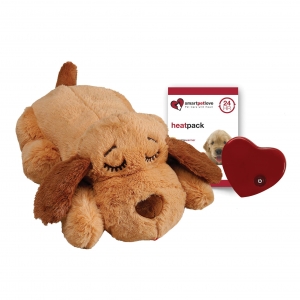
Crate training, thunderstorms and fireworks can make your dogs feel like cables that are being stretched too tight and beginning to fray. Melt away your dog’s stress and curb their bad behaviors, like excessive scratching and snarling, with the Smart Pet Love Snuggle Puppy. It features a real-feel, pulsing heartbeat that lasts up to two weeks on one set of AAA batteries and a non-toxic, disposable warming pack.

4. Noxgear LightHound
Noxgear; $55.95
Noxgear.com

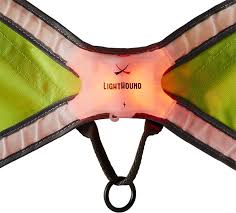
Made with military-grade CORDURA® fabric, the Noxgear Lighthound is like a party on a leash, with solid-color flashing and slow-fading color modes such as cool comet, independence day and photon burst. With 360-degree illumination, reflectivity and fluorescence, it’s visible for over half a mile. The LightHound is weatherproof, lightweight and machine washable with micro-USB rechargeable LED lights that last up to 12 hours. It quickly slides over your dogs’ favorite collars, harnesses or jackets, making sure that they’re always homeward bound.

5. Petcube Play
Petcube; $129 with 1-year care subscription
Petcube.com

Ever wondered what your pets get up to when they’re home alone? While they’re probably not massaging themselves with your KitchenAid, they might suffer from separation anxiety, depression or boredom. If they’re nibbling on your Nike Air Prestos, puffing up at the mailman or swatting at your vintage Tiffany lamp, break their anxiety with Petcube Play.

Featuring two-way audio, night vision and 3x digital zoom, it has a built-in laser that can be set to autoplay. The WiFi pet camera also has a cloud recording video service that provides up to 10 days of timeline history, reporting major sound and motion events straight to your smartphone.

6. Chuckit! Flying Squirrel
Natural Pet Warehouse; $9.99
Naturalpetwarehouse.com

Here’s one squirrel who loves being chased. The Chuckit! Flying Squirrel is made from heavy-duty canvas that will withstand rugged play while its soft, curved sides are gentle on your dog’s mouth. Fling him by his bright orange “paws” for a far-flung game of fetch. He also glows in the dark for engaging outdoor play, ideal for pets who are active at night or pet parents who work mid-shift. With water-resistant rubber feet, he floats in water for a splashing good time at the pool, lake or ocean.

7. Pretty Litter
Pretty Litter; $22
Prettylittercats.com

Unless you’re able to toilet train your cat like Robert De Niro in “Meet the Parents,” you’re stuck with a litter box that has big, ammonia-smelling lumps and dust clouds. Tired of masking the smell of urine and feces with baking soda and lifting 20-pound bags of litter? Try PrettyLitter. Made of highly absorbent silica microcrystals, it traps odors and bacteria while allowing moisture to evaporate. So you’ll only have to scoop the poop. For a single cat, a four-pound bag lasts an entire month and detects illnesses early, simply by changing colors. Yellow and olive green are normal, while blue, red, bright green and orange are telltale signs of UTIs, inflammation and kidney issues.

8. Wooly Snuffle Mat
Paws 5; $39.95
Paw5.us

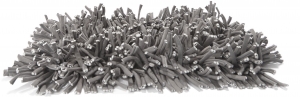
Handmade from a combination of virgin and upcycled materials, the Wooly Snuffle Mat is a playground for your canine’s nose. Hide kibble, treats or soft veggies between its fabric tassels and your dogs will snuffle, snort and sniff their way through dinner or snack time. Available in modern gray and machine-washable, this interactive puzzle toy encourages natural foraging skills by mimicking the hunt for food in grass. If your walks are growing shorter because of sour weather, your jam-packed schedule or your senior pet’s achy joints, it improves learning and memory while burning off excess energy.

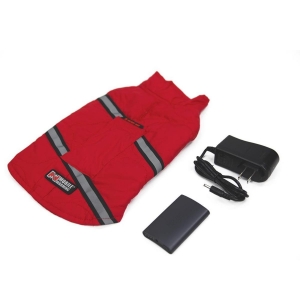
9. Rover 7v Battery Heated Dog Jacket with Bluetooth
Cozy Winters, $119
Cozywinters.com

The Rover Battery Heated Dog Jacket is worth investing in before Mother Nature’s next snow parade. Made from a lightweight nylon fabric, it has a neck collar slot for on-leash activity and Phoslite reflective safety trim. This Bluetooth dog vest uses powerful yet lightweight rechargeable lithium-ion batteries that can last up to 13 hours. Change its temperature (90°F on low to 104°F on high) on-the-fly wirelessly with the MW Connect app or use the built-in touch control button. Available in navy or red, it also comes in “Rover” for larger dogs and “Rover Mini” for toy-sized pets.

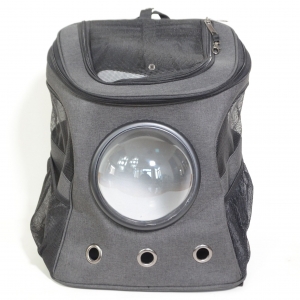
10. The Fat Cat Backpack
Your Cat Backpack; $119
Yourcatbackpack.com

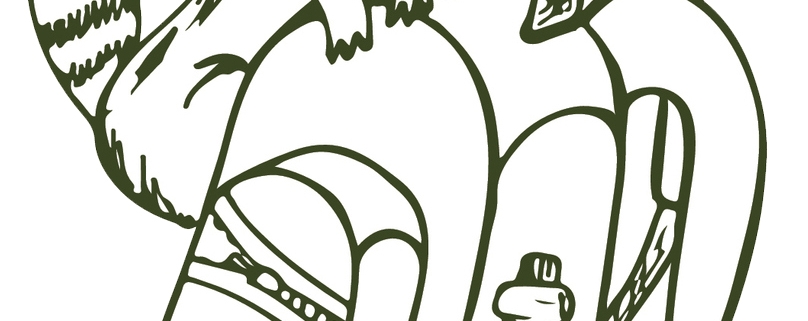
Whether you’re using the Fat Cat Backpack to explore the great outdoors or take regular trips to the vet, it’s never been easier or more adorable to carry your cat. Designed for big-boned breeds like Maine Coons and American Bobtails, this bubble bag holds nearly 20 pounds. It also has a bungee where you can clip a leash or harness so your cat can just hang out. Featuring mesh sides where you can stash treats and a water bottle, The Fat Cat has air holes in the front, a detachable bubble and a Velcro mat that’s machine washable. Available in charcoal or pink, it has enough room for your feline friend to lay down and turn around completely.

March 22, 2019/by Cherese Cobb
https://fetchmag.com/wp-content/uploads/2021/10/Fetchlogo2022rgb-3-300x175.jpg 0 0 Cherese Cobb https://fetchmag.com/wp-content/uploads/2021/10/Fetchlogo2022rgb-3-300x175.jpg Cherese Cobb2019-03-22 14:33:402023-12-29 12:46:4610 Unusually Cool Pet Products Every Owner Will Want
Features For Fido

THE HYDRANT: Recognizing Dogfighting: A Horrific, Loveless Life Lived by Too Many

By MICHELLE SEROCKI

There are things in this world that many of us don’t want to think about, talk about, or even read about. I understand that and am certainly not immune to it. I too would like to look the other way and pretend that some things don’t exist—things such as dogfighting. However, there’s a big problem with burying our heads in the sand: Education and awareness can cause big change in our world.

I’ve been educating myself and the public about the heinous “sport” of dogfighting for almost 10 years. It’s almost as hard to teach about as it is to learn about. I’m not a shock value educator. It doesn’t make sense, especially when it comes to dogfighting. It’s naturally scary, violent and awful—plain and simple. There’s no need for embellishment to make it sad or gruesome or heartbreaking. I encourage you to continue reading because the knowledge that you gain could end up saving a life somehow. I promise I’ll be gentle for the ultimate benefit of some potential survivor out there who needs you to pay attention and understand.

The Humane Society of the United States (HSUS) estimates that more than 40,000 people participate in organized dogfighting in the U.S., and hundreds of thousands more take part in impromptu street dogfighting. Those numbers are staggering and unexpected by most when they first hear them.

Most Americans have heard of one dogfighting bust in 2007. NFL superstar Michael Vick was caught and prosecuted, and 53 dogs were saved from the appropriately named Bad Newz Kennels. Many think this was an isolated incident or that dogfighting doesn’t exist anymore. Unfortunately, that couldn’t be further from the truth. It’s likely that thousands of dogs are living a horrific life at this very moment, waiting for their next brutal training session, their next fight and their next day of living a loveless life.

Ten years ago, on July 8, 2009, was the largest dogfighting bust in United States history. Over 400 dogs were removed in 10 hours from multiple properties in multiple states. Those 400-plus dogs went on to have more than 120 puppies in the following 60 days. The surviving dogs and their offspring became known as the Missouri 500. Four years later, on August 23, 2013, the second-largest dogfighting bust took place. This one confiscated 367 dogs from multiple properties and states and became known as the Alabama 367. These historic busts, along with at least three others in the 10 years following the Michael Vick bust, netted over 1,200 dogs from organized dogfighting situations.

Although organized dogfighting is most prevalent in the southern states of the U.S., there are problems in all areas of the country, including Wisconsin. The Milwaukee area had a couple small-organized busts in 2011 and 2014, where less then three dozen dogs were confiscated from each. Milwaukee, like larger cities, is home to a street-fighting problem rather then the large-scale organized rings that are found further south. Street fighting is common in urban areas where people face off their dogs in primarily unplanned altercations. Many times the fights are for resources such as clothes, shoes or small amounts of money. Other times fights are used for street cred or status.

Break the Cycle

There are things you can do to help end the barbaric abuse.

1. Tell your family and friends about this article, and raise awareness of this problem. Education and awareness are the two best ways to end violence.

2. Help local organizations to fight this type of cruelty. Check out the Brew City Bully Club and how they’re working against dogfighting. brewcitybullies.org

3. Support national organizations efforts too. The Humane Society of the United States and the ASPCA both do amazing work against dogfighting.

We all want to live in a world without animal cruelty, abuse and dogfighting. We all want to see the day when dogfighting has been eradicated from our community, country and world! Get involved in one way or another. The more we unite in our stand against animal crimes, the quicker we will see progress!

(column)

March 22, 2019/by Michelle Serocki
https://fetchmag.com/wp-content/uploads/2021/10/Fetchlogo2022rgb-3-300x175.jpg 0 0 Michelle Serocki https://fetchmag.com/wp-content/uploads/2021/10/Fetchlogo2022rgb-3-300x175.jpg Michelle Serocki2019-03-22 14:14:022023-12-29 12:46:55THE HYDRANT: Recognizing Dogfighting: A Horrific, Loveless Life Lived by Too Many
The Vet Is In

Continuous Glucose Monitoring: New Advances in Diabetes Care

By MEGAN TREMELLING, DVM, LVS

The practice of medicine is always evolving. Like other forms of science, it follows a meandering path, sometimes getting lost in false trails and dead ends but always working toward better understanding, better accuracy, better tools and better outcomes. It can be frustrating for researchers to struggle for years to understand a thing or to find out that something we thought we understood was actually wrong, but the trend is always positive eventually. Nowhere is this more clear than in the state of care for type 1 (insulin-dependent) diabetes mellitus, which occurs in dogs as well as in humans.

Diabetes has been known to physicians since ancient times, but it was not until the 1700s that scientists began to understand how the disorder worked, and it was not until the 1920s that insulin was named, isolated and purified to a degree that it could be used to treat diabetes effectively.

Dogs have long been part of diabetes research. The Canadian researchers who first developed the use of insulin worked with dogs before attempting the treatment on humans. Unfortunately, dogs’ early role was exclusively as research subject. In the days before animal welfare regulations were enacted, dogs could and did suffer terribly for the sake of knowledge. The silver lining to this grim cloud is that as companion animal medicine became more established, the knowledge gained could be applied to pets as well as to their owners. By the 1940s, veterinary journals were reporting on the diagnosis and treatment of naturally occurring diabetes in dogs. As the care for humans with diabetes has improved, so too the care for pets with diabetes has improved.

For the management of human diabetes, several types of insulin are made, varying mostly in how quickly they are absorbed and how long they last. This allows veterinarians some options in the choice of insulin therapy for dogs.

Another important development in diabetes care has been an improved ability to measure glucose levels in the urine and, later, in blood. Now, instead of choosing insulin doses on the basis of clinical signs, doctors can calculate appropriate doses of insulin that are customized to their patients. For many years, humans with diabetes have used home blood glucose monitors, obtaining small samples of blood from their fingertips with lancet devices designed for the purpose. It is an unpleasant but very beneficial part of diabetes management, and all humans with diabetes who have access to modern medical care are taught to do it. Unfortunately, home monitoring of blood glucose in pets has not become universal.

The obstacles to home monitoring of blood glucose in dogs are several. In the first place, obviously, dogs don’t have fingertips. It is possible for an owner to obtain blood samples at home, using the lancet devices on their dogs’ ears or pads, though some dogs tolerate this procedure better than others. The second challenge, and perhaps more important, is that it can be challenging for veterinarians to teach owners how to correctly interpret the data they obtain. Humans with diabetes get immediate feedback in the form of their physical condition. Low blood glucose and high blood glucose both cause symptoms that often can be recognized and treated before they become too severe. While we think it likely that dogs can feel their lows and highs in a similar fashion, they can’t tell us about it. This means that attempting to keep their blood glucose under very tight control can backfire and cause more serious problems. I know veterinarians who refuse to have their clients check blood glucoses at home because too many clients in the past have misinterpreted the data and caused inadvertent harm to their pets.

How then do veterinarians manage pets with diabetes? We rely on clinical signs and some in-hospital testing. A test called a glucose curve requires the pet to spend the day at the veterinarian’s office having blood drawn frequently for glucose testing; then the veterinarian assesses the information and makes recommendations on how to dose insulin. This test has some serious limitations. A glucose curve paints a picture of one day only, while dogs, like humans, vary day to day, so the glucose curve may give too small a picture. We also use a blood test called fructosamine (similar to the A1C test used in humans) that gives one number to reflect average blood glucose over several weeks, but that may be too big a picture; it doesn’t give details about what time the glucose decreases, how long it stays down or when it goes up.

Enter the newest development in canine diabetes management: continuous glucose monitoring.

Continuous glucose monitors (CGM) have been used for humans for years. They consist of a tiny sensor that is implanted under the skin along with the accompanying equipment to record the information obtained. Glucose readings can be obtained about every five minutes. Many humans with diabetes wear a CGM every day, using the constant stream of glucose readings to guide their insulin therapy. In some cases, the CGM can be paired with an insulin pump so that the human doesn’t even have to intervene to treat highs and lows; it is done automatically.

Recently, veterinarians have begun to adopt the use of CGM for their patients. There were some bugs to work out since some of the systems designed for human use did not work well on veterinary patients, but improvement has been made, and there are now CGMs that are proven to be accurate in dogs, small enough to be used on even tiny dogs, and affordable for owners. There is no need for a dog to wear a CGM all the time. Rather, veterinarians place a CGM on a patient and leave it for a few days to a week, collecting data as the dog goes about its usual routine at home. Then the veterinarian can use all this information to make better recommendations about insulin use.

CGM is blazing new trails in the care of pets with diabetes. We can hardly wait to see what the next technical breakthrough brings us!

March 22, 2019/by Megan Tremelling
https://fetchmag.com/wp-content/uploads/2021/10/Fetchlogo2022rgb-3-300x175.jpg 0 0 Megan Tremelling https://fetchmag.com/wp-content/uploads/2021/10/Fetchlogo2022rgb-3-300x175.jpg Megan Tremelling2019-03-22 14:10:082020-07-22 21:06:39Continuous Glucose Monitoring: New Advances in Diabetes Care
Page 8 of 15«‹678910›»

Looking for Something?

Search Search

Archives

For Book, Product & Article Review:

Email us for further instructions.

FOR DIRECT QUESTIONS:

Nastassia Putz, Publisher
(262) 337-1967

nputzfetchmag@gmail.com

FOR ADS/DISTRIBUTION:

Current Circulation: 10,000 to 13,000 copies per quarter, distributed to 300+ locations throughout Southeastern Wisconsin (Milwaukee, Madison, Racine/Kenosha, Green Bay).

Questions? Email us at info@fetchmag.com.

© 2025 - FETCH Magazine • franklin web designer
  • Link to Facebook
  • Link to X
  • Link to LinkedIn
  • Privacy Policy
  • Terms of Service
Scroll to top Scroll to top Scroll to top

This site uses cookies. By continuing to browse the site, you are agreeing to the use of our cookies.

Accept and ClosePrivacy PolicyDeny

Cookie and Privacy Settings


How we use cookies

We may request cookies to be set on your device. We use cookies to let us know when you visit our websites, how you interact with us, to enrich your user experience, and to customize your relationship with our website.

Click on the different category headings to find out more. You can also change some of your preferences. Note that blocking some types of cookies may impact your experience on our websites and the services we are able to offer.

Essential Website Cookies

These cookies are strictly necessary to provide you with services available through our website and to use some of its features.

Because these cookies are strictly necessary to deliver the website, refusing them will have impact how our site functions. You always can block or delete cookies by changing your browser settings and force blocking all cookies on this website. But this will always prompt you to accept/refuse cookies when revisiting our site.

We fully respect if you want to refuse cookies but to avoid asking you again and again kindly allow us to store a cookie for that. You are free to opt out any time or opt in for other cookies to get a better experience. If you refuse cookies we will remove all set cookies in our domain.

We provide you with a list of stored cookies on your computer in our domain so you can check what we stored. Due to security reasons we are not able to show or modify cookies from other domains. You can check these in your browser security settings.

Google Analytics Cookies

These cookies collect information that is used either in aggregate form to help us understand how our website is being used or how effective our marketing campaigns are, or to help us customize our website and application for you in order to enhance your experience.

If you do not want that we track your visit to our site you can disable tracking in your browser here:

Other external services

We also use different external services like Google Webfonts, Google Maps, and external Video providers. Since these providers may collect personal data like your IP address we allow you to block them here. Please be aware that this might heavily reduce the functionality and appearance of our site. Changes will take effect once you reload the page.

Google Webfont Settings:

Google Map Settings:

Google reCaptcha Settings:

Vimeo and Youtube video embeds:

Other cookies

The following cookies are also needed - You can choose if you want to allow them:

Accept settingsHide notification only