
• Shopping Cart Shopping Cart
    0Shopping Cart
FETCH Magazine
  • Link to Facebook
  • Link to X
  • Link to LinkedIn
  • Home
  • Features For Fido
  • FETCH Columns
    • Health & Hounds
    • The Scratching Post
    • Off the Leash
    • Just One Tail
    • Tips 4 Kids
  • K9 Marketplace
    • Advertise With FETCH
  • FETCH Me If You Can
    • Adoptables
    • To The Rescue
  • Contact FETCH
    • Editor’s Paw
    • About FETCH
    • FETCH Issues
  • Click to open the search input field Click to open the search input field Search
  • Menu Menu
The Vet Is In

IVDD: Do You Know This Disease?
By MARYSSA BECKMAN, DVM, MECA

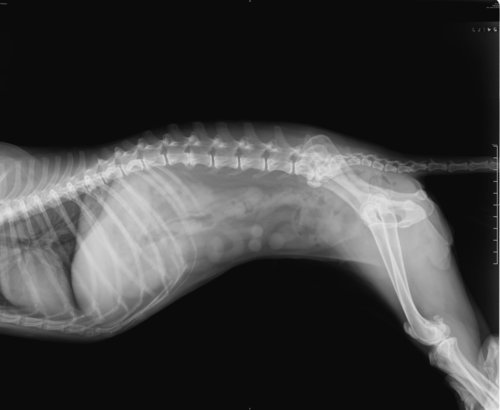
The alluring cuteness of Dachshunds and Corgis most likely stems from their disproportionate body composition: long bodies, tiny legs! While absolutely adorable, their layout does not come without added risks. Their tiny spines carry a lot of joint stress that predisposes them to a condition called intervertebral disc disease (IVDD). This disease is common and can result in complete hind end paralysis for life if not recognized and treated quickly. So let’s examine the common signs, why it happens, and what to do if you suspect this disease in your furry friend.

The vertebrae of the spine have small discs between each segment that serve as shock absorbers and keep the vertebrae from suffering trauma when your dog’s body is active. These discs prevent your dog’s spine from being damaged doing simple things like going up stairs or playing catch, but over time these discs undergo degeneration. This results in the hardening of the disc, which ultimately leads to loss of function. When this happens, the disc is at risk of extruding or moving out of its normal position when a compressive force is applied. This is because the normal squishy shock absorber is now a spring-loaded projectile. In small breed dogs, this compacted disc material is extruded upwards when a force is applied to it, and as a result, the spinal cord that lives above it becomes compressed. If this sounds like a bad thing, you’re right! Depending on where this occurs in the spinal cord, signals from the brain may not be able to be transmitted effectively, which can lead to your dog not being able to walk appropriately, control their bladder, and may also cause them a lot of pain. This process can happen in a matter of minutes and will need medical attention fast.

Okay, so I have a large-breed dog. I am safe, right?

Unfortunately, they get their own type of IVDD. Breeds like German Shepherds, Labradors, Dobermans, and really any larger dog that is active can have this occur. The good news is that these types of dogs get a protrusion of the disc instead of an extrusion that comes on slow and can usually be medically managed.

All right, it’s happened! Now how do I treat it?

As you can imagine, nerves are very delicate and require fast action to ensure appropriate recovery. IVDD can range from a small amount of spinal pain to complete hind limb paralysis, and it can progress to an irreversible disease in a matter of hours depending on severity. If your dog is lucky, a small amount of back pain that is often recognizable by your dog crying out going up stairs, reluctance to jump may be as far as it progresses. In this case, strict cage rest and some anti-inflammatory medications can have your pooch back to normal in no time. If, however, your dog is one that has problems placing their feet, cannot stand up, and does not seem to have voluntary bladder control, you may be looking at a surgery to fix your pet. During this surgery, the veterinarian will go into the spine and remove the disc material compressing the spinal cord. This is a costly surgery, and only certain veterinarians will be able to preform it. Before doing so, the exact location of the disc rupture will need to be determined by using X-rays, CT, or potentially an MRI. Once performed, the recovery period is variable with some dogs walking in days, while some may need rehabilitation and may not walk normally for months. Recovery rate is about 70 to 100 percent with dogs that don’t have complete loss of deep pain in their hind limbs before the surgery. If this procedure is not performed quickly, the nerves will lose blood supply and the situation may be irreparable. So if you suspect this is happening to your pet, act fast.

So what signs can you look for, and how can you prevent this?

Dogs usually show a wobbly hind end, reluctance to climb stairs, or may cry out in pain with early onset of the disease. With more progressive disease, dogs will be unable to rise or stand on their own and will be incapable of placing their feet, especially in the hind limbs. Preventing high-impact activity such as jumping, quick turns, or fast stops can limit stress put on the spine. Ultimately though, this can happen to any breed at any time, so knowing what to look for and when to seek veterinary care can save your pet’s life.


 

December 22, 2017/by Nastassia Putz
Tags: IVDD, Maryssa Beckman, winter 2017
Share this entry
  • Share on Facebook
  • Share on X
  • Share on WhatsApp
  • Share on Pinterest
  • Share on LinkedIn
  • Share on Tumblr
  • Share on Reddit
  • Share by Mail
https://fetchmag.com/wp-content/uploads/2018/01/iStock-530948585.jpg 410 500 Nastassia Putz https://fetchmag.com/wp-content/uploads/2021/10/Fetchlogo2022rgb-3-300x175.jpg Nastassia Putz2017-12-22 16:14:442020-07-22 21:43:03IVDD: Do You Know This Disease?
You might also like
Treating Canine PTSD
Briards: Hearts Of Gold Wrapped In Fur
ALL SPIRIT HEELING: Whole-istic Healing
Love and Support Guide
CELEBRITY PAW PROFILE: Millie the Canine Concierge
Love & Support
Are Muzzles A Necessary Tool?

Looking for Something?

Search Search

Archives

For Book, Product & Article Review:

Email us for further instructions.

FOR DIRECT QUESTIONS:

Nastassia Putz, Publisher
(262) 337-1967

nputzfetchmag@gmail.com

FOR ADS/DISTRIBUTION:

Current Circulation: 10,000 to 13,000 copies per quarter, distributed to 300+ locations throughout Southeastern Wisconsin (Milwaukee, Madison, Racine/Kenosha, Green Bay).

Questions? Email us at info@fetchmag.com.

© 2025 - FETCH Magazine • franklin web designer
  • Link to Facebook
  • Link to X
  • Link to LinkedIn
  • Privacy Policy
  • Terms of Service
Link to: Are Muzzles A Necessary Tool? Link to: Are Muzzles A Necessary Tool? Are Muzzles A Necessary Tool? Link to: Treating Canine PTSD Link to: Treating Canine PTSD Treating Canine PTSD
Scroll to top Scroll to top Scroll to top

This site uses cookies. By continuing to browse the site, you are agreeing to the use of our cookies.

Accept and ClosePrivacy PolicyDeny

Cookie and Privacy Settings


How we use cookies

We may request cookies to be set on your device. We use cookies to let us know when you visit our websites, how you interact with us, to enrich your user experience, and to customize your relationship with our website.

Click on the different category headings to find out more. You can also change some of your preferences. Note that blocking some types of cookies may impact your experience on our websites and the services we are able to offer.

Essential Website Cookies

These cookies are strictly necessary to provide you with services available through our website and to use some of its features.

Because these cookies are strictly necessary to deliver the website, refusing them will have impact how our site functions. You always can block or delete cookies by changing your browser settings and force blocking all cookies on this website. But this will always prompt you to accept/refuse cookies when revisiting our site.

We fully respect if you want to refuse cookies but to avoid asking you again and again kindly allow us to store a cookie for that. You are free to opt out any time or opt in for other cookies to get a better experience. If you refuse cookies we will remove all set cookies in our domain.

We provide you with a list of stored cookies on your computer in our domain so you can check what we stored. Due to security reasons we are not able to show or modify cookies from other domains. You can check these in your browser security settings.

Google Analytics Cookies

These cookies collect information that is used either in aggregate form to help us understand how our website is being used or how effective our marketing campaigns are, or to help us customize our website and application for you in order to enhance your experience.

If you do not want that we track your visit to our site you can disable tracking in your browser here:

Other external services

We also use different external services like Google Webfonts, Google Maps, and external Video providers. Since these providers may collect personal data like your IP address we allow you to block them here. Please be aware that this might heavily reduce the functionality and appearance of our site. Changes will take effect once you reload the page.

Google Webfont Settings:

Google Map Settings:

Google reCaptcha Settings:

Vimeo and Youtube video embeds:

Other cookies

The following cookies are also needed - You can choose if you want to allow them:

Accept settingsHide notification only