• Shopping Cart Shopping Cart
    0Shopping Cart
FETCH Magazine
  • Link to Facebook
  • Link to X
  • Link to LinkedIn
  • Home
  • Features For Fido
  • FETCH Columns
    • Health & Hounds
    • The Scratching Post
    • Off the Leash
    • Just One Tail
    • Tips 4 Kids
  • K9 Marketplace
    • Advertise With FETCH
  • FETCH Me If You Can
    • Adoptables
    • To The Rescue
  • Contact FETCH
    • Editor’s Paw
    • About FETCH
    • FETCH Issues
  • Click to open the search input field Click to open the search input field Search
  • Menu Menu
The Vet Is In

Making Your Dog Feel At Home In The Hospital

By MEGAN TREMELLING, DVM, LVS

To some people, leaving your dog at the veterinary hospital for any reason sounds harsh, like leaving a child at one of those ghastly orphanages in Dickens books. There’s no doubt that most dogs would rather be in their own homes, but we do our best to make them feel at home with us. So what are the accommodations really like at the hospital?

A comfortable bed is step one, and we have bedding in a variety of thickness and layering options. Some dogs want to have enough blankets to burrow under. Orthopedic mattresses are a great thing for older dogs whose joints get creaky. There are a few dogs that simply cannot tolerate being in a kennel at all, and though I strongly recommend teaching all dogs to accept a kennel for this reason, we have worked out ways to confine the kennel-phobic without them feeling trapped.

Many owners bring a blanket or article of clothing that smells like home. I think this is a great idea for a pet that is wary of novelty. Once a pet has settled in, of course, their own smell is on their bedding. Most dogs are quite willing to go back into their kennels after they’ve been out for tests or treatment; they recognize it as their own safe space.

Nobody wants to sit in bed all day, even if they’re sick, so all dogs are walked several times per day if their condition allows. There are a few small dogs that are trained to use pee pads, but even those are given the opportunity to take a little exercise. (Exception: When I had a 5lb puppy hospitalized overnight and it was -5°F, I did not take the little mite outside; she would have frozen solid.)

Boredom can be a problem even with pets that are ill enough to be hospitalized. Visits from the owner help to pass the time. We keep a supply of stuffed animals around, carefully chosen for safe construction, and provide them to any patient who looks like they might want something to snuggle. If snuggling turns to chewing, unfortunately, the dog loses stuffy privileges, but we can resort to treat-stuffed Kongs if the patient’s condition permits.

Speaking of food, the phrase “hospital food” takes on a very different meaning when you’re talking about the animal hospital. It isn’t bland, boring, cafeteria-style stuff like you might see in an old-fashioned human hospital. Since many of our patients are feeling too sick to eat properly, we stock a variety of delicacies to tempt feeble appetites, along with several therapeutic diets for those that are ready to take more substantial meals.

Some of the dogs that visit us are really excited to see that there are other dogs on the premises. They would love to make friends with everyone. Unfortunately, for safety reasons, we can’t allow playtime among the patients, but if they want human friends, they’re in luck. Everyone who works at our clinic loves dogs madly. No matter how tired or grumpy we might be at the beginning of our shifts, the sweet faces of our patients help us to focus on the positive. It’s all we can do to get our work done when there are so many ears to be scratched and tummies to be rubbed. When things are slow at the office… well, there may or may not have been a few patients who spent part of their hospitalization sleeping on my lap in the office. I’m not saying.

Some people go a little bit overboard with the comforts they provide their pets at home. I’m pretty sure no dog ever suffered for lack of a $30,000 wedding chapel doghouse (for, of course, dog weddings), a Marie-Antoinette style brocade dog bed (complete with ostrich plumes), or a microvelvet Chesterfield dog sofa (with nailhead trim, naturally). The accommodations at the veterinary hospital will be a bit more spartan than that. (For one thing, everything we use is 100 percent machine washable). But, for all that, I think we do all right at helping our patients to feel at home.

March 22, 2018/by Megan Tremelling
https://fetchmag.com/wp-content/uploads/2021/10/Fetchlogo2022rgb-3-300x175.jpg 0 0 Megan Tremelling https://fetchmag.com/wp-content/uploads/2021/10/Fetchlogo2022rgb-3-300x175.jpg Megan Tremelling2018-03-22 16:25:422020-07-22 21:36:55Making Your Dog Feel At Home In The Hospital
Features For Fido

ALL SPRIRIT HEELING: Animals: Our Healing Partners

BY STACY KRAFCZYK

We’ve already established that animals are sentient beings. They see and know everything that’s going on in our lives, from our emotional instability to the energetic chaos from the home or work environment to disruptions in our schedules. Everything that affects us affects them.

More and more people are consciously becoming aware of this and these patterns, which is wonderful. The gap between our awareness and the animal’s perspective is connecting us closer together. We sense how our animal is feeling or even thinking. And this is often based on how the animal is acting.

So how do we deepen that bond and enhance the communication? We must be very clear and specific on our daily happenings, who is coming over to our house and any health changes/concerns we are having for the sake of both parties.

Animals age much quicker than us humans, so we tend to go to the caretaker role rather fast in a health crisis. Animal communication can help with identifying the details of a new health regimen. Are you giving them shots every day now? Is there medication to be given once or twice daily? Was there a sudden change in their food? Will there be more frequent visits to the vet? Or maybe meeting a new vet for a new treatment is needed.

It may sound silly but specific communication and visualizations work wonders. Try visualizing in your mind giving them this new pill or powder in their food and showing your animal friend that it will make them feel better. Try telling them how much you love them and that even if they don’t like something, it’s only temporary.

This gives you the ability to compromise as well. With animal communication you can help your furry companion understand why you have to do certain things for their care and then offer them something they want in return. Like a special treat, a trip to the dog park, a nice ride in the car, a visit to grandma or grandpa’s house, or an extra walk may help make this new transition easier. Most animals will compromise where others might need more coaxing. Keep in mind that animals have free will and choices just as we do. They may not be able to pay bills but they deserve to be respected for their wants and needs too.

Some animals will communicate with their humans that they’re ok with this new routine, treatment, pill or person that is helping them on their current journey. A lot of animals want to stay with their humans and aren’t ready to give up, so they become willing participants in the healing regimen. Most animals will do their part and then ask for something else instead of the stinky stuff or the nasty tasting pill etc.

And some may say “no” to the treatment, for instance having a leg amputated. Why? Because an animal’s physical body is tired and won’t make it through the additional surgery. There are some elderly animals that don’t have the energy for any invasive treatments. Sometimes we realize this but need the validation or confirmation of our animal’s wishes.

So instead of trying to hide the pills or be sneaky, you will see your animal give you a sign or feeling of surrender, ease and even peacefulness when you share the important details of each scenario with them. It will help ease our worries and give them a clear understanding of the appropriate next steps.

Animals should be our partners in the healing process so that there aren’t any doubts, questions or concerns. If fears and worries arise for either party, communication will help ease them. Communication is the key to a happy, healthy and connected household.

March 22, 2018/by Nastassia Putz
https://fetchmag.com/wp-content/uploads/2021/10/Fetchlogo2022rgb-3-300x175.jpg 0 0 Nastassia Putz https://fetchmag.com/wp-content/uploads/2021/10/Fetchlogo2022rgb-3-300x175.jpg Nastassia Putz2018-03-22 11:20:152023-12-29 12:49:59ALL SPRIRIT HEELING: Animals: Our Healing Partners
Editor's Paw

Home is Where the Heart is…

Dear FETCH Friends:

Feeling helpless and in a constant panic is how I would describe being “homeless.” And not just in the tangible sense of the word but rather the notion of not having a family. As I sit here writing this, both my kids are sick and my dad is in the ICU dying from cancer. I’ve never watched someone close to me die this way. My dog Tess and my other dog Gracie were both so unbelievably dear to me that watching them be euthanized will forever be trapped inside my heart and head. The pain I felt in those circumstances is now once again surfacing as I watch my father struggle to breathe. I feel like my heart is dying.

And then just like that, I snap back and remember to breathe. My daughter takes my hand and says, “Come on mommy, let’s go read a book.” I sigh in relief because for a moment I am present again and the joy in her voice takes precedence over the horrible stuff going on in and outside my home. The constant internal struggle between wanting to be by my dad’s side and wanting to be with my sick kids is very real and present. No matter where I am right now, I feel guilty and sad that I’m not with the other. But what I keep forgetting is that even though I am not physically present with everyone, my heart is.

When I’m with my kids, my heart and head are still with my father and vice versa. My home doesn’t only include everyone and every pet that is in close proximity to me.

It includes my dad in the ICU, it includes my sisters who live an hour drive away, it includes my dogs who have died and so on. A “home” encompasses a whole lot more than four walls and a door. It’s the individuals and animals that bring love and joy into our lives. And bring so much pain and sadness when they leave us. This conglomerate of emotions and experiences is what makes life worth living. Every being deserves a home.

To having a sense of “home” no matter where life takes you or your loved ones,

March 21, 2018/by Nastassia Putz
https://fetchmag.com/wp-content/uploads/2018/06/fam.jpg 800 1200 Nastassia Putz https://fetchmag.com/wp-content/uploads/2021/10/Fetchlogo2022rgb-3-300x175.jpg Nastassia Putz2018-03-21 18:00:082020-07-22 21:38:03Home is Where the Heart is…
Off-The-Leash

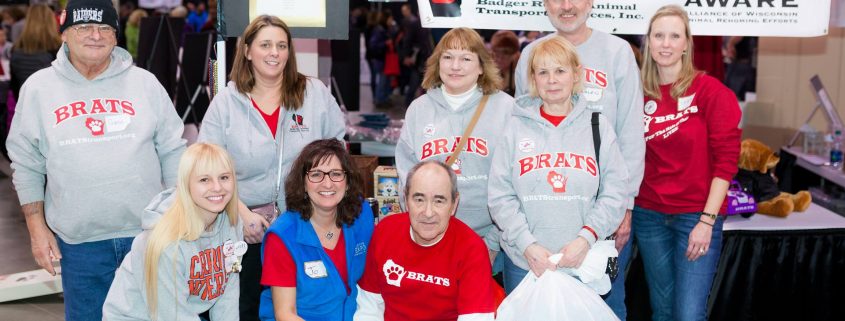
Q & A with Lynn Mitchell, Co-Founder & President of BRATS

I started in rescue in 2000 when I adopted my first rescue dog. At the time, rescue organizations were far and few between! I spent the next 8 years helping to re-home Golden Retrievers. The later part of that was spent doing transports. That is when we realized that the rural shelters were having a hard time adopting out anything other than a purebred dog. The connections made during the years in rescue helped get BRATS off the ground. We had connections with almost all of the shelters in Wisconsin, many of the rescues and with local breeders. My husband and I have 2 dogs that we transported but ended up staying with us. One is a Boxer Mix and the other is a Pitbull.

What is BRATS?
BRATS is a Wisconsin-based animal rescue transport service. We started this in 2008 to help rural Wisconsin shelters get their animals to areas of the state where they had a better chance at adoption.

At the time their kill rates were high. The big thing holding them back was a reliable transportation system to move animals around. Fast forward 10 years and most of these same shelters are now finding themselves in a position to bring IN animals.

Do you help more than just dogs?
We learned early on that it wasn’t just dogs that needed to be transferred. There were cats, birds, small animals, rabbits, reptiles and occasional farm animals. Wisconsin has a rescues for all of these so we adjusted our business model to include all of them.

What programs do you have?
1. We have our ambulance service to pick up sick and wounded animals at the shelters to get them to Spay Me in Madison. That led to our work with UW Vet School in Madison. We also run a chuck wagon service that moves food and supplies between shelters. So nice to see everyone sharing!

2. During the busy times of the year we help MADACC get their animals to Wisconsin Humane Society’s Spay/Neuter Clinic.

3. BRATS has worked with breeders in Wisconsin since the beginning. We move their retired breeder dogs to rescues and shelters that know how to work with them. Some are seniors, but most of them are in the 2-8 year range. We would prefer to see them living out their lives as pampered pets vs never knowing a loving family. Most find homes in a few weeks. Some take longer to adjust. Occasionally breeders will call with puppies that have gotten too old to sell. We work with breeders of big dogs like Golden Retrievers and Golden Doodles to the cute little fluffy dogs. They all deserve a home, and we do our best to make sure they get that.

4. Two years ago we started our Wisconsin Junior Heroes For Animals to recognize kids making a difference in the lives of animals. That is what BRATS does right now. It will be interesting to see what we look like in 5 years as we are always adjusting to what our partners need. Junior Heroes are nominated by shelters, rescue groups, family members or friends. Some of these kids have overcome some pretty substantial hardships in their lives but find a way to help animals. One young lady raised funds for vests for police service dogs. Some of them help bottle feed kitties and puppies. Some spend a lot of time at their local shelter reading to animals and helping in ways only kids can. There is a BRATS youth volunteer this year that reads to the animals on the transports to help them de-stress. We want to recognize these wonderful kids and their good deeds. It really helps to keep them motivated. Kids who are kind to animals are generally kind to humans!

How can the public help?
The public can help by spaying/neutering and microchipping their animals and keeping them safe so they don’t end up in shelters.

BRATS does not charge for our services. There are no paid positions. Everyone pays for their own vehicles and their own expenses. Many of the people that drive during the week are retired or on some type of fixed income. A gas card helps them tremendously.

BRATS is pretty complex for an all- volunteer organization nobody outside of rescue knows about. We prefer to have the spotlight on our shelter/rescue partners who are doing the heavy lifting.

March 21, 2018/by Nastassia Putz
https://fetchmag.com/wp-content/uploads/2018/06/BRATS-Junior-Heroes-Group-2017.jpg 1371 1920 Nastassia Putz https://fetchmag.com/wp-content/uploads/2021/10/Fetchlogo2022rgb-3-300x175.jpg Nastassia Putz2018-03-21 11:10:552020-07-22 21:38:42Q & A with Lynn Mitchell, Co-Founder & President of BRATS
Features For Fido

Top 5 Dog Subscriptions

By CHERESE COBB

Don’t hog all the mail wealth: treat your pooch to one of these five subscription boxes. Stuffed with mouth-watering treats, cuddly plush toys and adjustable accessories, they’re gifts that keep on giving—in licks, cuddles and tail wags.

1. BarkBox
Cost: $29 per month
Shipping: Free to the United States and Canada
Coupon: Use the code RWPCH0LSSR for a free month of products

What’s inside:
The leader of the monthly dog box pack in both sales and name recognition, BarkBox is one of the least expensive services that you’ll find. Offering a multi-dog discount, the company even donates 10 percent of its proceeds to roughly 3,000 different rescues. Featuring monthly themes like Bento Blossoms, Sniffin’ Safari, and Chewrassic Bark, BarkBox includes at least two innovative toys, two all-natural bags of treats, and a heavy-duty chew toy. “The monthly toy selection…is always a plush item. It makes your pooch’s toy chest start to remind you of ‘The Claw’ game at the local arcade,” says Aasit Thakkar, a current BarkBox subscriber. “I’d prefer my pooch to enjoy toys of different natures, i.e., balls, puzzles, ropes, tossers etc. If BarkBox offered either more challenging or fun toys…then I’d say the service is truly worth barking about.” However, if a toy or treat doesn’t get your dog’s tail wagging, BarkBox will send a replacement for free. “No muss. No fuss. No disappointed pups.”

2. Pet Gift Box
Cost: $24.99 per month with
free shipping in the United States,
excluding Hawaii and Alaska
Coupon: Use the code FETCH
for $5 off

What’s Inside:
Pretested on pets for “paw prints of satisfaction,” Pet Gift Box offers six toys and treats themed around the relevant holidays. Whether you have a small, medium or large pet, you can choose a one-time, 3-month or 12-month subscription. Cats will receive balls, catnip-filled toys, catnip and feathery chasers, while dogs get balls and plush, stuffingless or waterproof toys. “My dogs [Christopher and Danny], being both greedy and toy-obsessed, soon worked out that they could open the box with their nose by flipping the lid…so it had to be kept out of reach,” says Kim O’Meara, a Pet Gift Box customer. Every box looks like a gift with a bow and supports Pets for Patriots, Family Reach, and Music Drives Us.

3. RescueBox
Cost: $29.95 per month
Shipping: A $5.95 flat-rate fee is
applied to orders outside of the
contiguous 48 states

What’s Inside: “My dog, Diamond, gets extremely excited each month when her RescueBox comes in the mail,” says Ashley Jacobs, the founder of Sitting for a Cause. “She loves to rip it open, tear the paper wrapping to shreds, and play with her new toys.” Depending on whether you have a cat or a small, medium, or large-sized dog, every month the RescueBox team will handpick five toys and treats. Every delivery also features a rescue story that’s only possible because of the generous donations of subscribers. “What I love most about the box…they will tell you the impact your subscription has had. Since subscribing to RescueBox in October of 2016, they have donated 80 bowls of food and 32 vaccines to shelter animals.”

4. PupJoy
Cost: $26 per month
Shipping: Free shipping to the
lower 48 states

What’s Inside:
“A finalist for the 2018 Purina Pet Care Innovation Prize, PupJoy has a very transparent charitable donation model to help support animal rescue, in partnership with the BISSELL Pet Foundation,” says Dustin McAdams, the founder and CEO. “We donate $2 on every order and 100 percent of the donated money goes directly to help over 3000 rescue organizations that they work with.” PupJoy also has the most personalized model available for dog parents. After choosing an Uno or Grande (small or large) box, you can specify the type of items that you want: accessories, toys and treats, including all-natural and organic options. Depending on what stage of life your dog is going through, you’ll get five to seven products valued at over $40. For example, if your dog is a chew-inator, you’ll get virtually indestructible chew toys, or if your dog is in potty-training mode, you may get extra pee spray. “PupJoy’s toys are the kind of stuff I would expect to see in an expensive dog boutique in New York City,” says Amanda, the owner of Shiloh Shepherd’s Luna Rae and Nova Mae. “The treats…have straight-forward ingredients and a small business vibe. They all have ingredients that would be edible for us humans too!”

5. Bullymake
Cost: $39 per month
Shipping: Free to the US and $8
to Canada

What’s Inside:
A monthly subscription box for power chewers, Bullymake never sends plush toys or rawhide, which can cause choking, blockage and diarrhea. Instead, the team sends two to three extremely durable toys and three to four treats, chews and healthy edibles. While the treats are hand-selected based on your dog’s allergies and size, you can opt for a “toys-only” box. “While I wish that it [the default subscription box] was more heavily weighted on the toy-side rather than the treat, I also appreciate that Bullymake always sends one long-term chew treat—it’s a good way to occupy one of my dogs for a few hours,” says Christine Massey, a long-time Bullymake customer. Even if your ruff and tuff pup continues to turn his or her adorable toys into ripped-up rags, under the Bullymake 100 Percent Guarantee, they’ll ship you a replacement that’s rougher and tougher for free.

Did your favorite dog subscription box make the list? Let us know at info@fetchmag.com

March 6, 2018/by Cherese Cobb
https://fetchmag.com/wp-content/uploads/2018/10/RescueBox2.jpg 400 700 Cherese Cobb https://fetchmag.com/wp-content/uploads/2021/10/Fetchlogo2022rgb-3-300x175.jpg Cherese Cobb2018-03-06 16:47:382023-12-29 12:50:11Top 5 Dog Subscriptions
Features For Fido

Mutts: A Timeless Treasure

Read more
March 1, 2018/by Nastassia Putz
https://fetchmag.com/wp-content/uploads/2018/04/IMG_6791.jpg 2435 4528 Nastassia Putz https://fetchmag.com/wp-content/uploads/2021/10/Fetchlogo2022rgb-3-300x175.jpg Nastassia Putz2018-03-01 11:18:512023-12-29 12:50:18Mutts: A Timeless Treasure
Features For Fido

Treating Canine PTSD

Trauma isn’t limited to humans. Whether a result of abuse, abandonment, neglect, an accident or a natural disaster…

Read more
January 19, 2018/by Brian
https://fetchmag.com/wp-content/uploads/2021/10/Fetchlogo2022rgb-3-300x175.jpg 0 0 Brian https://fetchmag.com/wp-content/uploads/2021/10/Fetchlogo2022rgb-3-300x175.jpg Brian2018-01-19 17:28:112023-12-29 12:50:26Treating Canine PTSD
The Vet Is In

IVDD: Do You Know This Disease?

By MARYSSA BECKMAN, DVM, MECA

The alluring cuteness of Dachshunds and Corgis most likely stems from their disproportionate body composition: long bodies, tiny legs! While absolutely adorable, their layout does not come without added risks. Their tiny spines carry a lot of joint stress that predisposes them to a condition called intervertebral disc disease (IVDD). This disease is common and can result in complete hind end paralysis for life if not recognized and treated quickly. So let’s examine the common signs, why it happens, and what to do if you suspect this disease in your furry friend.

The vertebrae of the spine have small discs between each segment that serve as shock absorbers and keep the vertebrae from suffering trauma when your dog’s body is active. These discs prevent your dog’s spine from being damaged doing simple things like going up stairs or playing catch, but over time these discs undergo degeneration. This results in the hardening of the disc, which ultimately leads to loss of function. When this happens, the disc is at risk of extruding or moving out of its normal position when a compressive force is applied. This is because the normal squishy shock absorber is now a spring-loaded projectile. In small breed dogs, this compacted disc material is extruded upwards when a force is applied to it, and as a result, the spinal cord that lives above it becomes compressed. If this sounds like a bad thing, you’re right! Depending on where this occurs in the spinal cord, signals from the brain may not be able to be transmitted effectively, which can lead to your dog not being able to walk appropriately, control their bladder, and may also cause them a lot of pain. This process can happen in a matter of minutes and will need medical attention fast.

Okay, so I have a large-breed dog. I am safe, right?

Unfortunately, they get their own type of IVDD. Breeds like German Shepherds, Labradors, Dobermans, and really any larger dog that is active can have this occur. The good news is that these types of dogs get a protrusion of the disc instead of an extrusion that comes on slow and can usually be medically managed.

All right, it’s happened! Now how do I treat it?

As you can imagine, nerves are very delicate and require fast action to ensure appropriate recovery. IVDD can range from a small amount of spinal pain to complete hind limb paralysis, and it can progress to an irreversible disease in a matter of hours depending on severity. If your dog is lucky, a small amount of back pain that is often recognizable by your dog crying out going up stairs, reluctance to jump may be as far as it progresses. In this case, strict cage rest and some anti-inflammatory medications can have your pooch back to normal in no time. If, however, your dog is one that has problems placing their feet, cannot stand up, and does not seem to have voluntary bladder control, you may be looking at a surgery to fix your pet. During this surgery, the veterinarian will go into the spine and remove the disc material compressing the spinal cord. This is a costly surgery, and only certain veterinarians will be able to preform it. Before doing so, the exact location of the disc rupture will need to be determined by using X-rays, CT, or potentially an MRI. Once performed, the recovery period is variable with some dogs walking in days, while some may need rehabilitation and may not walk normally for months. Recovery rate is about 70 to 100 percent with dogs that don’t have complete loss of deep pain in their hind limbs before the surgery. If this procedure is not performed quickly, the nerves will lose blood supply and the situation may be irreparable. So if you suspect this is happening to your pet, act fast.

So what signs can you look for, and how can you prevent this?

Dogs usually show a wobbly hind end, reluctance to climb stairs, or may cry out in pain with early onset of the disease. With more progressive disease, dogs will be unable to rise or stand on their own and will be incapable of placing their feet, especially in the hind limbs. Preventing high-impact activity such as jumping, quick turns, or fast stops can limit stress put on the spine. Ultimately though, this can happen to any breed at any time, so knowing what to look for and when to seek veterinary care can save your pet’s life.


December 22, 2017/by Nastassia Putz
https://fetchmag.com/wp-content/uploads/2018/01/iStock-530948585.jpg 410 500 Nastassia Putz https://fetchmag.com/wp-content/uploads/2021/10/Fetchlogo2022rgb-3-300x175.jpg Nastassia Putz2017-12-22 16:14:442020-07-22 21:43:03IVDD: Do You Know This Disease?
The Vet Is In

Are Muzzles A Necessary Tool?

By MEGAN TREMELLING, DVM, LVS

Like most veterinarians, I genuinely love animals, but the sad fact is that not all of my patients love me back. For every pet that greets me with a wagging tail and happy kisses, I get at least one who gives me side-eye and a stony expression. I can’t blame them, of course. I invade the personal space of every one of my patients when I do a physical exam, and further indignities and discomforts come with almost everything I do. Some patients take it all cheerfully, others tolerate it, and then there are those who put a furry foot down and say, “No way.”

This is where muzzles come in. Some dog owners find muzzles scary. They can look like torture devices, although they don’t actually hurt the dog, and it is possible to buy cute ones. Dogs dislike the muzzle, and owners find this upsetting. “Why do you need to muzzle my dog?” they sometimes ask. “He’s not going to bite you! What kind of veterinarian is afraid of dogs?”

Well, it’s like this. I’m not afraid of dogs; if I were, I couldn’t do my job. I do, however, have a certain respect for what their teeth can do. It’s born of seeing many a dog bite injury in my career: many of them on my patients, some on my co-workers, and a few on myself. Our furry best friends come with teeth that were designed to cut and crush flesh, and they’re pretty good at it. Big dogs of course can be more dangerous, but size doesn’t always matter. Almost any dog can, if motivated, give me an injury that will put me out of work for months.

What are the odds that any particular dog will bite? Unfortunately, that dog’s owner isn’t always the best person to make that prediction. Dogs that are angels at home with their people sometimes make bad choices when they’re in a strange place, surrounded by strangers, feeling threatened, or cornered or in pain. Some dogs will even bite their owners when they’re at the vet’s office. In this game, there are no bonus points for doing things the reckless way so I prefer to err on the side of safety.

Placing a muzzle on an uncooperative dog can actually make the process of providing veterinary care easier on the patient. It isn’t immediately obvious that this would be true, but it is true. Some dogs, when muzzled, just freeze. You have seen this phenomenon in action if you have ever seen a rowdy puppy annoying an older dog until the adult has to give the pup a correction; they do this by taking hold of the pup’s muzzle to make it stop misbehaving. In the same way, some dogs, when muzzled, seem to get the message that it’s time to stop snapping and struggling. That means I can do my job quickly and thoroughly rather than having a prolonged wrestling match that’s far more upsetting to the patient than whatever it was I was trying to do in the first place. Of course, the process works best if the dog is muzzle-trained, and I encourage every dog owner to do so.

But even or especially in patients that won’t give up resisting, a muzzle ultimately reduces the risk of anyone getting bitten. And while I selfishly want to keep my skin intact, I also want to avoid bites for the dog’s and the owner’s sake. Wisconsin state law is quite strict on the subject of dog bites. Any medical care provider who treats a person that was bitten by a dog is legally required to report the bite to the authorities, and the dog is then subject to rabies quarantine. This is expensive for the dog’s owner and means extra visits to the veterinarian’s office for the dog that didn’t enjoy going in the first place. If the dog dies or is euthanized for any reason before the end of the quarantine period, its body must be tested for rabies, a process that can also be expensive for the owner.

Of course muzzles aren’t the only tool I have to keep teeth off skin. I rely on my expert staff to distract and safely restrain pets, and I use all my training and experience to make veterinary care as painless and reassuring as possible for the patients. But there are times when a muzzle is the right choice, and then I don’t hesitate. It’s for everybody’s protection.

December 22, 2017/by Megan Tremelling
https://fetchmag.com/wp-content/uploads/2021/10/Fetchlogo2022rgb-3-300x175.jpg 0 0 Megan Tremelling https://fetchmag.com/wp-content/uploads/2021/10/Fetchlogo2022rgb-3-300x175.jpg Megan Tremelling2017-12-22 16:09:022020-07-22 21:43:56Are Muzzles A Necessary Tool?
Features For Fido

ALL SPIRIT HEELING: Whole-istic Healing

BY STACY KRAFCZYK

Animals are like us in so many ways that sometimes we forget or don’t realize that what we do for ourselves we can also do for them. For instance your dog may benefit from the following: massages, chiropractic, acupuncture, crystals, hydrotherapy, laser therapy, Reiki and more.

Animal communication is a great “tool” to use to find out if your animal is happy, sad, in pain, etc. But it’s also important to use other tools. It is necessary to take your animals to the vet for health checks and various treatments. Or for example, dog trainers for proper training. And it is also important to see practitioners who specialize in holistic animal care—Chinese and western medicines are a great combination.

For example, if your animal doesn’t feel well, is lethargic or not eating and looks like it is suffering, then a vet would be your first call. Your second call should perhaps be an animal communicator.

Animal communication can definitely improve behavioral issues, walking on a leash, and other issues. However, training is still necessary to build ones confidence with their dog so they learn to speak the same language and not send mixed messages. As humans we tend to send mixed messages to our animals, telepathically and verbally. In our minds we say, “don’t bite, don’t bark, don’t jump” but in our minds we’re showing them barking, biting and jumping. Training is a great way to send the right signals, deepening the bond and strengthening our confidence.

A few tools:

Chiropractic/Spinal Manipulation. Animals get thrown out of whack all the time, just like humans do, and strongly benefit from adjustments to realign their body which also affects their health, energy and emotions.

Essential Oils. Get ones that are all-natural (not chemical or fragrance grade) and good quality to diffuse in your room or car, especially after a stressful event like surgery. This can aid in calming your furry friend.

Massage. Getting your animal massaged will keep your animals limber, energetic and bring relief especially if there is already an issue at hand.

Reiki. A form of energy work done in person or from a distance can help heal the animal emotionally, mentally, physically and spiritually. Reiki has been an amazing part of my healing journey personally and professionally with hundreds of animals.

Food. Raw food, high-quality canned or dry food, grain-free, etc., can also assist your animals in healing and reducing ear infections, UTIs, yeast, diabetes and other illnesses or diseases. I’ve personally witnessed miraculous transformations with changing of the diet alone. Contact your local pet food store for holistic options.

Cold Laser Therapy. This is done by certified professionals to accelerate healing safely and effectively.

Pain Medicine. Whether it is holistic, natural, Chinese herbs and/or western meds…it is VERY important to help maintain your animal’s pain in old age, as well as his diseases or illnesses. One of the main complaints from animals is their pain level. Remember, it is an animal’s instinct and nature to hide or disguise his pain. If they were in the wild, they may be killed or forced out of their pack so they tend to hide their discomfort until it becomes so unbearable they begin to show signs like not eating, limping, excessive licking or sudden behavioral changes like aggressiveness, not sleeping well, pacing and digging at the carpet. Please talk to your vet about pain medicine and/or natural remedies from holistic pet food stores.

Sleep. This is important to people for recharging and healing their bodies and is the same for animals. It is challenging for animals to heal and recharge if they’re in pain. A lot of animals have shared in animal communication sessions that they would like some pain management around breakfast, dinner and most importantly, bedtime. Our animal friends will sleep better and so will their humans.

There are many avenues you can explore to help heal your animals emotionally and physically. You may need to use several different healing modalities continually until the pain begins to diminish or is at least under control.

Talk to your vet about some of these options and if your vet doesn’t know about these, then do your own research. Go in chat rooms, Facebook groups, and on other websites to find the right answers for your animals. The Internet is awesome for finding out information.

December 22, 2017/by Nastassia Putz
https://fetchmag.com/wp-content/uploads/2021/10/Fetchlogo2022rgb-3-300x175.jpg 0 0 Nastassia Putz https://fetchmag.com/wp-content/uploads/2021/10/Fetchlogo2022rgb-3-300x175.jpg Nastassia Putz2017-12-22 13:55:182023-12-29 12:50:36ALL SPIRIT HEELING: Whole-istic Healing
Page 12 of 15«‹1011121314›»

Looking for Something?

Search Search

Archives

For Book, Product & Article Review:

Email us for further instructions.

FOR DIRECT QUESTIONS:

Nastassia Putz, Publisher
(262) 337-1967

nputzfetchmag@gmail.com

FOR ADS/DISTRIBUTION:

Current Circulation: 10,000 to 13,000 copies per quarter, distributed to 300+ locations throughout Southeastern Wisconsin (Milwaukee, Madison, Racine/Kenosha, Green Bay).

Questions? Email us at info@fetchmag.com.

© 2025 - FETCH Magazine • franklin web designer
  • Link to Facebook
  • Link to X
  • Link to LinkedIn
  • Privacy Policy
  • Terms of Service
Scroll to top Scroll to top Scroll to top

This site uses cookies. By continuing to browse the site, you are agreeing to the use of our cookies.

Accept and ClosePrivacy PolicyDeny

Cookie and Privacy Settings


How we use cookies

We may request cookies to be set on your device. We use cookies to let us know when you visit our websites, how you interact with us, to enrich your user experience, and to customize your relationship with our website.

Click on the different category headings to find out more. You can also change some of your preferences. Note that blocking some types of cookies may impact your experience on our websites and the services we are able to offer.

Essential Website Cookies

These cookies are strictly necessary to provide you with services available through our website and to use some of its features.

Because these cookies are strictly necessary to deliver the website, refusing them will have impact how our site functions. You always can block or delete cookies by changing your browser settings and force blocking all cookies on this website. But this will always prompt you to accept/refuse cookies when revisiting our site.

We fully respect if you want to refuse cookies but to avoid asking you again and again kindly allow us to store a cookie for that. You are free to opt out any time or opt in for other cookies to get a better experience. If you refuse cookies we will remove all set cookies in our domain.

We provide you with a list of stored cookies on your computer in our domain so you can check what we stored. Due to security reasons we are not able to show or modify cookies from other domains. You can check these in your browser security settings.

Google Analytics Cookies

These cookies collect information that is used either in aggregate form to help us understand how our website is being used or how effective our marketing campaigns are, or to help us customize our website and application for you in order to enhance your experience.

If you do not want that we track your visit to our site you can disable tracking in your browser here:

Other external services

We also use different external services like Google Webfonts, Google Maps, and external Video providers. Since these providers may collect personal data like your IP address we allow you to block them here. Please be aware that this might heavily reduce the functionality and appearance of our site. Changes will take effect once you reload the page.

Google Webfont Settings:

Google Map Settings:

Google reCaptcha Settings:

Vimeo and Youtube video embeds:

Other cookies

The following cookies are also needed - You can choose if you want to allow them:

Accept settingsHide notification only